
For a handful of books
- 1998 – 2020
- Ended
- Talk
- 23 seasons
- 9.0/10
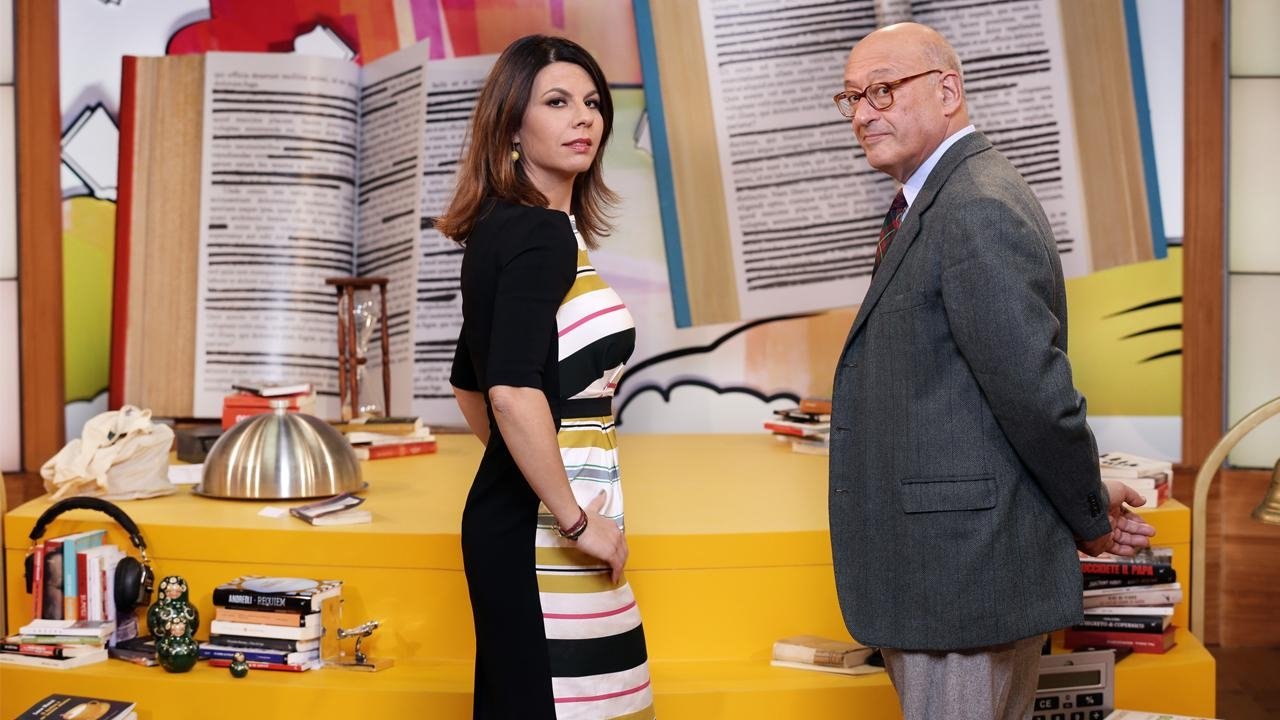
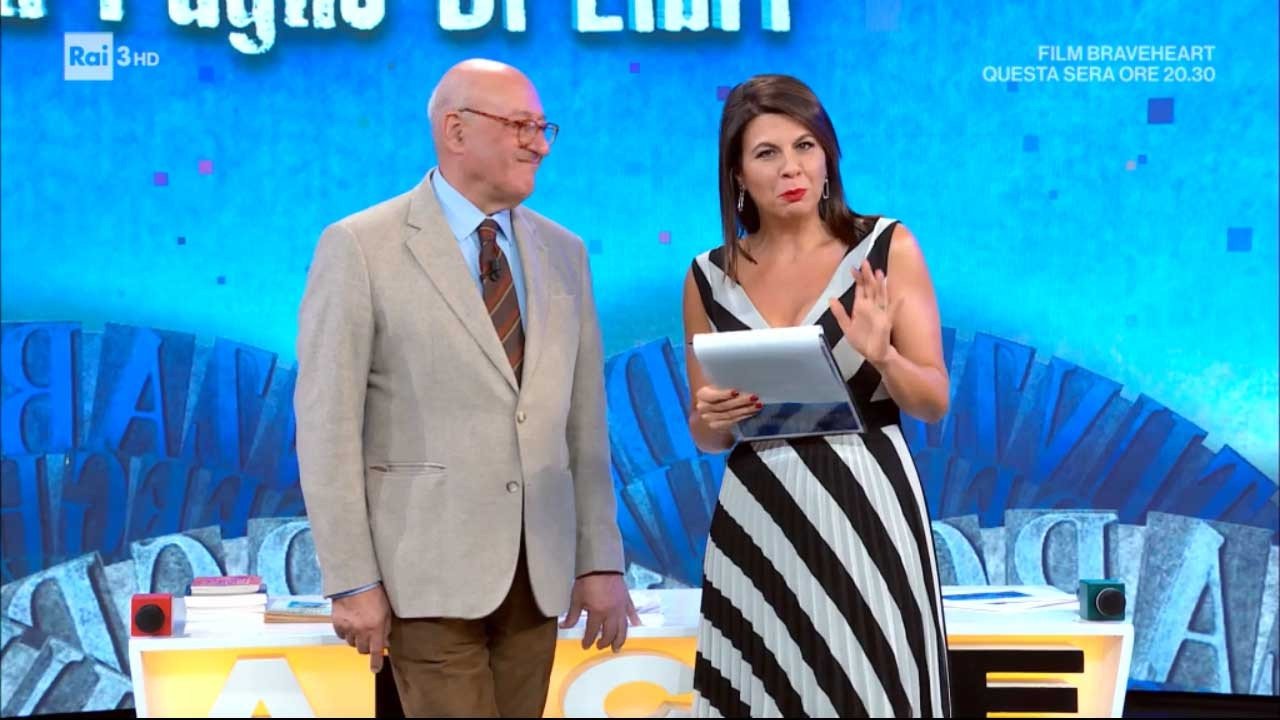
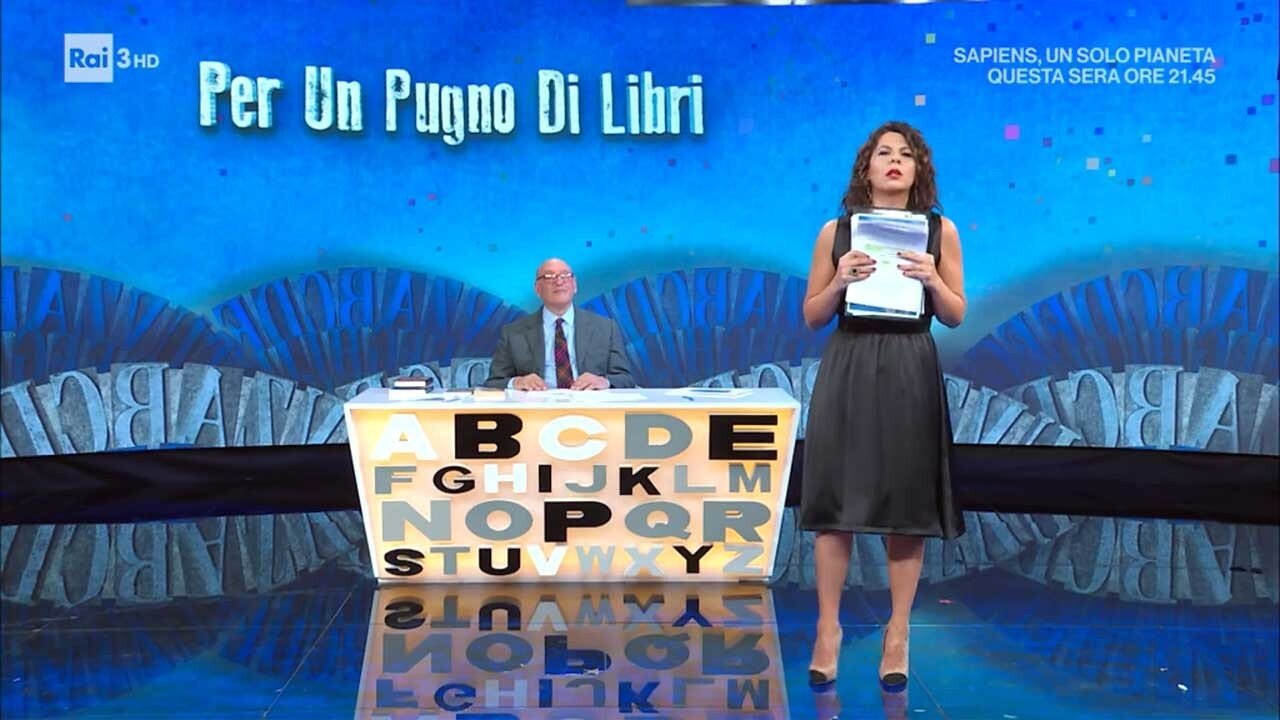
The Rai3 program that features two school classes comparing notes on a literary classic.
Latest: Season 23 · 2020
View all seasonsE1. Martin Eden (di Jack London)
Jan 18, 2020 · 49m
In this first episode, the two competing are the Liceo Classico "Giacomo Leopardi" of Macerata and the Liceo Classico "Galileo Galilei" of Nardò (LE). The book they are competing on has been defined as one of "the angry books of American literature": Martin Eden" by Jack London published in 1909. The novel, most often read as a fictionalized autobiography of its author, instead reflects the anxieties and contradictions of American society at the end of the nineteenth century.
E2. Storie naturali (di Primo Levi)
Jan 25, 2020 · 55m
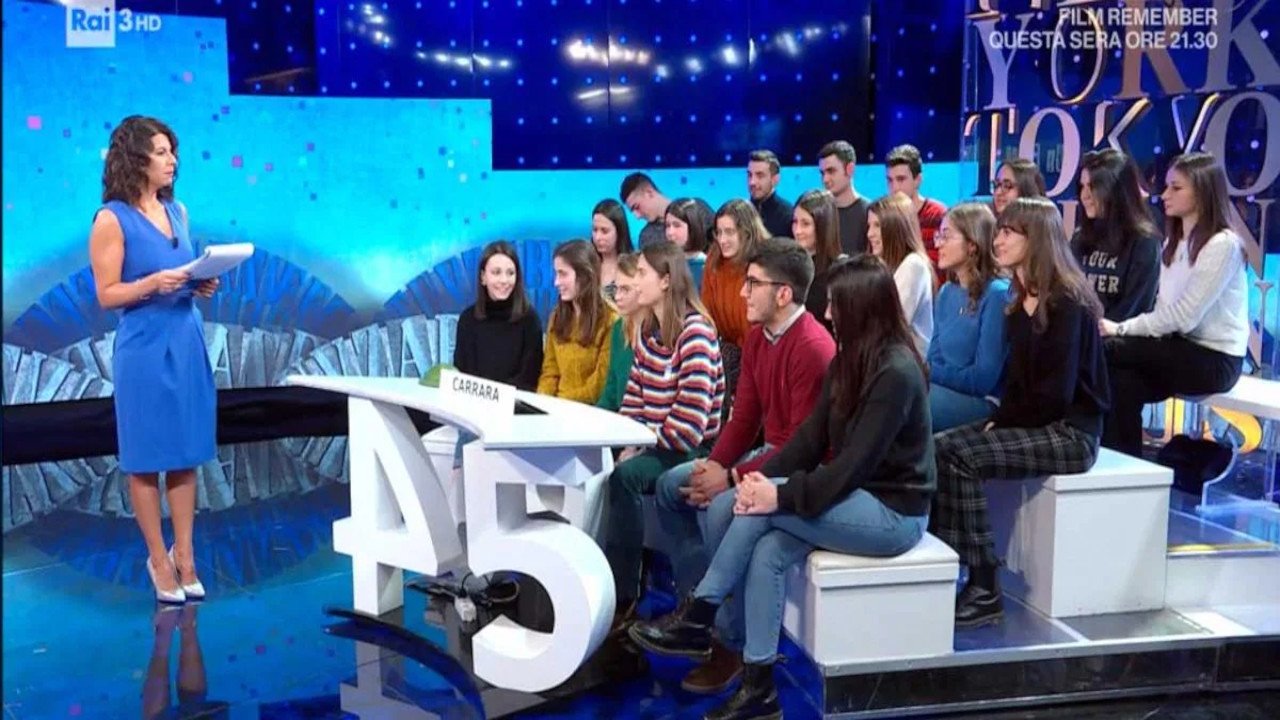
The episode pits the "Guglielmo Marconi" Scientific High School of Carrara against the "Giuseppe Garibaldi" Classical High School of Castrovillari (CS). To commemorate Holocaust Remembrance Day, the classes were asked to read "Natural Histories" by the Turin writer and chemist Primo Levi. They are 15 scientific and science fiction stories published by Einaudi in 1966. Pages in which, not infrequently, the writer uses the register of irony and satire to tell us about a future increasingly conditioned by technological progress, by disturbing and utopian experiments in which extraordinary and unpredictable machines operate. Levi himself explains the reason for these stories: "I wrote them... trying to tell an intuition that is not rare today: the perception of a flaw in the world we live in, of a small or large flaw, of 'a defect of form' that nullifies one or another aspect of our civilization or our moral universe".
E3. Aspettando Godot (di Samuel Beckett)
Feb 1, 2020 · 50m
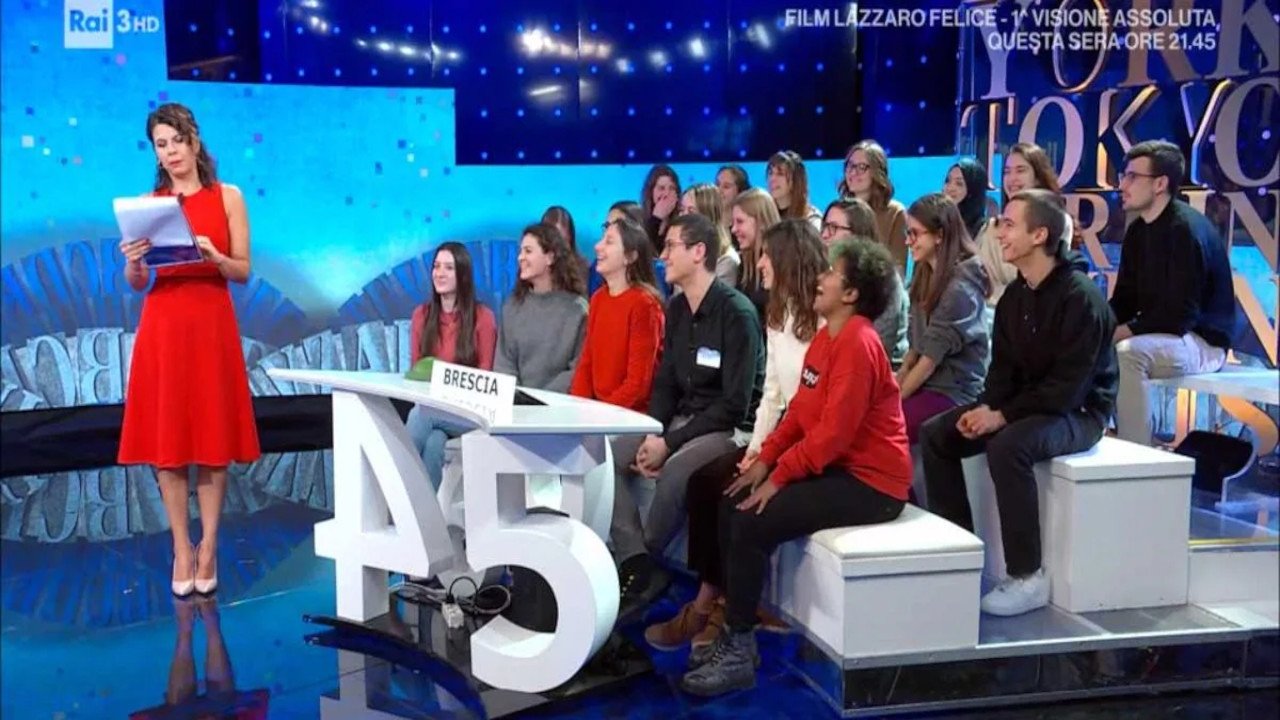
The third episode of "Per un Pugno di libri", the most famous book-game on Italian television, sees the Liceo Scientifico "Nicolò Copernico" of Brescia (BS) and the Liceo Classico "Filippo A. Gualterio" of Orvieto (TR) compete this Saturday on one of the most revolutionary texts of twentieth-century theatre: Waiting for Godot by the Irish writer Samuel Beckett, published in 1952. A work without a real plot in which the characters, Vladimir and Estragon, live a life of fulfillment in the vain wait for Godot, for his arrival. Everyone waits for him even though they know he will never arrive. A work, this one by Samuel Beckett, very current, that speaks to us of the absurdity of life, of its nonsense, of the absence of values and points of reference and of the loneliness of modern man.
E4. Il giocatore (di Fedor Dostoevskij)
Feb 8, 2020 · 50m
The fourth episode sees the Liceo Classico "Giulio Cesare" of Rome and the Liceo Classico "Renato Cartesio" of Villaricca (NA) compete on the novel "The Gambler", written in 1866 by one of the most important novelists of all time: the Russian writer Fyodor Dostoevsky. Set in a German spa town, Roulettenburg, whose casino attracts numerous tourists, the main theme of "The Gambler" is gambling that infects and besieges the book's protagonist, Aleksej Ivànovic, who narrates his story and that of the other characters in the book in the first person. Dostoevsky, with his unparalleled capacity for analysis and introspection, tells us in this novel the downward spiral of a man who is a victim of his own vice. "A self-conscious and unredeemed free fall, waiting for the last, definitive, rien ne va plus!". At stake, as always, is not money, but works of genius (i.e. many books) and the possibility of accessing the final between the two best-ranked classes during the program.
E5. Frankenstein (di Mary Shelley)
Feb 15, 2020 · 50m
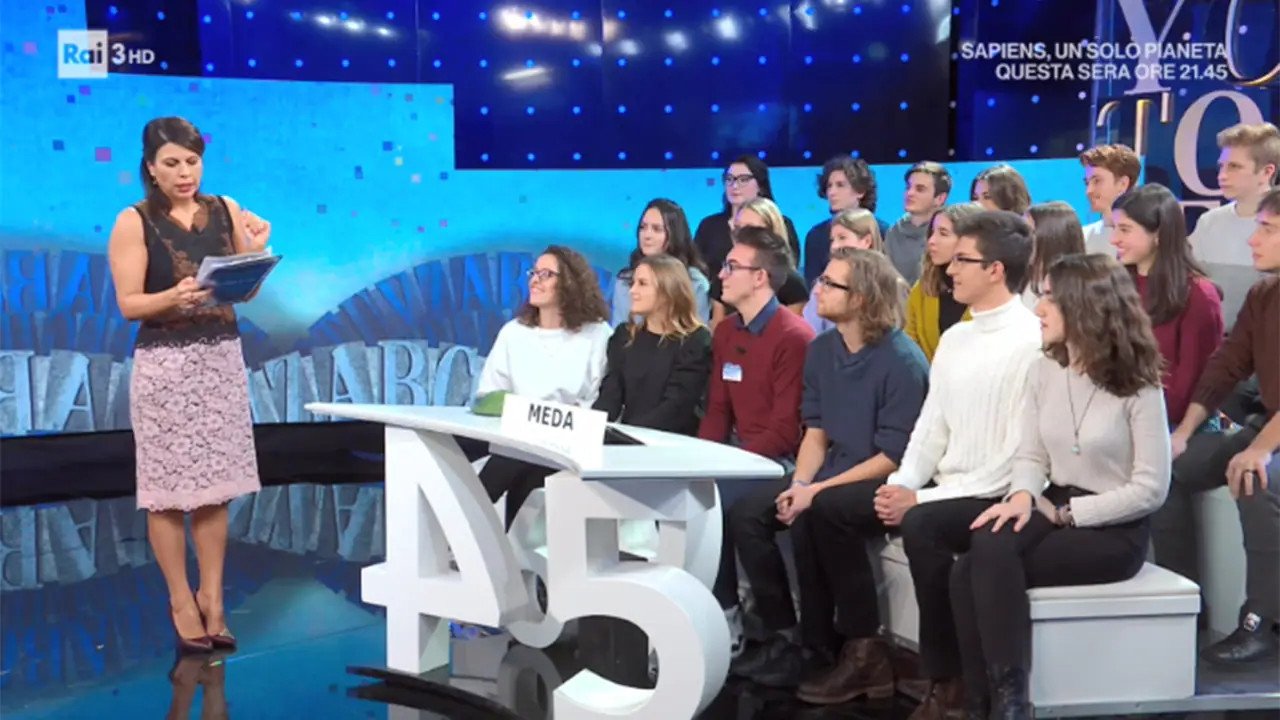
In this episode, the "Marie Curie" Scientific High School of Meda (MB) and the "Antonio Pacinotti" Scientific High School of Cagliari compete on the famous "Gothic" novel Frankenstein by the British writer Mary Shelley, published in 1818. Hosted, as always, by Geppi Cucciari and Piero Dorfles. Written in epistolary form, the book tells the story of Victor Frankenstein, a young and brilliant scientist who, driven by an immoderate, unstoppable ambition, creates a living being assembled with body parts from cadavers. The scientist thus gives life to a being that is anything but perfect: a deformed, monstrous, terrifying creature. With Frankenstein, Mary Shelley not only questions the limits of modern science, but above all investigates the folds, the deepest and most disturbing fears of the human soul, its unconscious. At stake, as always, are not money, but works of genius (i.e., lots of books) and the chance to access the final between the two best-ranked classes during the program.
E6. Poirot a Styles Court (di Agatha Christie)
Feb 29, 2020 · 48m
The episode is tinged with mystery with the novel "Poirot at Styles Court" by the British writer Agatha Christie, published in 1920. We are in England during the First World War and Captain Arthur Hastings, wounded on the front, is invited to spend his convalescence at the country estate of a friend of his, in Essex, at Styles Court. Here, however, the quiet existence of the Cavendish family and their friends is shattered by a terrible murder. It is at this point in the story that the character of Hercule Poirot appears for the first time in Christie's pages, "an extraordinary little dandy, with exceptional gray cells". It will be him, the most famous and eccentric investigator in European literature, to deliver the real murderer to justice and to unmask the blackmail and pettiness that hide in that corner of old England.
+2 more episodes — open all seasons to browse every episode.