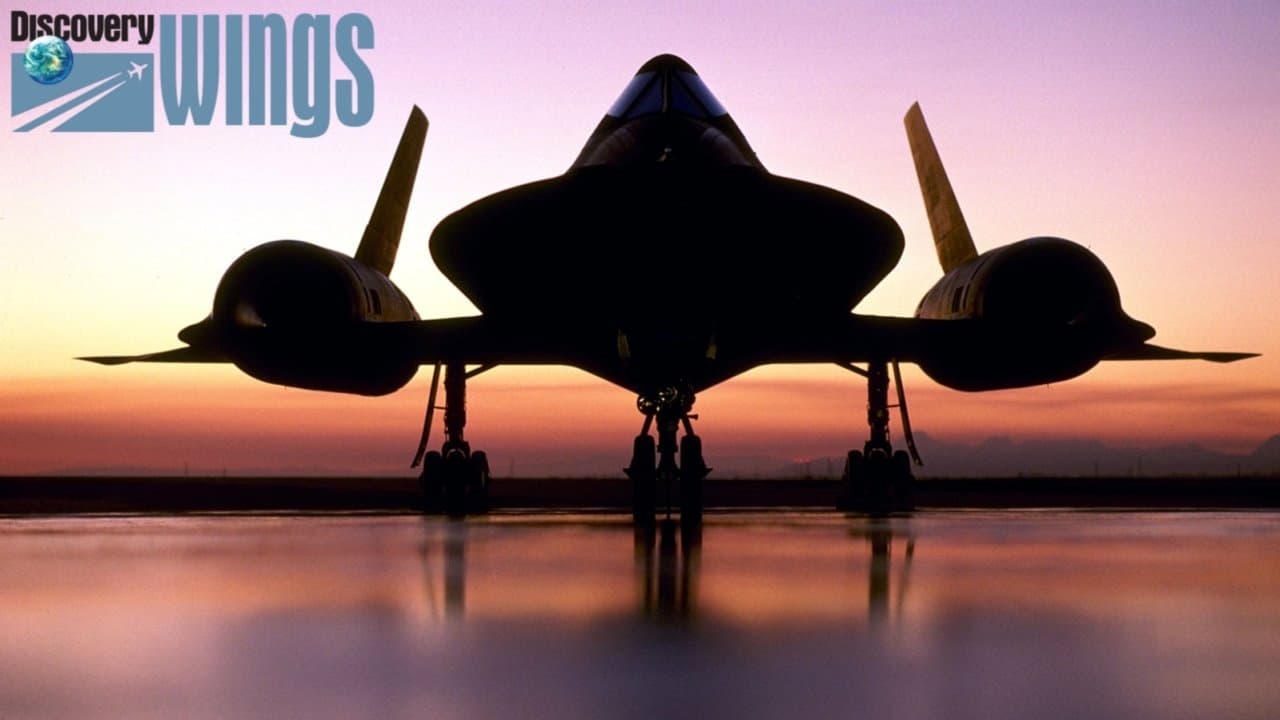

Wings
- 1988 – 2004
- Returning Series
- Documentary
- ~45m / ep
- 9 seasons
- 7.2/10
Aviation history series which aired on the Discovery Channel family of networks. Originally called Great Planes.
Latest: Wings Over Vietnam: The Missions · 2002
View all seasonsIn 2002, this eight-episode program was aired, hosted by David Scott. During the course of the Southeast Asian war, the United States developed many new types of air tactics that had never previously been needed. New missions were devised, often under bizarre code-names. Some of these missions have gone on to become legends, while others have simply faded. What does remain are the men who flew the missions, the planes that were involved, and incredible stories of determination, triumph and tragedy. Wings Over Vietnam compares rare combat footage with first-hand accounts, to create a captivating portrait of these unique missions.
E1. The FACs
Oct 20, 2002 · 45m
High technology did not play the major part in Southeast Asia that may have been expected. Rather, it was back to basics, the guerrilla activity of the Viet Cong produced a need for low flying, slow speed, durable aircraft for the Counter-Insurgency or COIN role. The Air Force created Foward Air Controllers (FACs) to guide and control air strikes on enemy positions In the jungles of Vietnam, flying in their light propeller-driven aircraft - 0-1 Bird Dogs and 0V-2 Skymasters until the purpose-designed aircraft, the twin engine Bronco, was rushed into service.
E2. Dust Off
Oct 21, 2002 · 45m
Drawing on its first experiments with helicopters in Korea, the Army in Vietnam came to rely almost entirely on the helicopter for medical evacuation. The Dust Off and Medevac helicopter ambulance units tested and perfected for medical use the Army's new helicopler, the UH-1 ("Huey" Iroquois), and developed several new devices, especially the hoist, that helped save thousands of American and allied lives between 1962 and 1973. The pilots of these helicopter ambulances displayed a courage and devotion to duty that earned them widespread respect from soldiers in Vietnam.
E3. Rolling Thunder
Oct 22, 2002 · 45m
Operation Rolling Thunder marked the first sustained American assault on North Vietnamese territory and thus represented a major expansion of U.S. involvement in the Vietnam War. In an effort to convince the North Vietnamese government to abandon its support of the insurgency in South Vietnam, President Johnson began a new bombing campaign in March 1965, known as Operation Rolling Thunder. Lasting from 2 March 1965 until 1 November 1968, Rolling Thunder was the longest bombing campaign in United States history. The massive Rolling Thunder offensive is recalled in interviews with the F-105 Thunderchief pilots, as well as Navy Yankee Station A-4 Skyhawk pilots.
E4. The Jolly Greens
Oct 23, 2002 · 45m
One of the most unsung heroes of the Southeast Asian War were Winch Men. Lowered from large camouflage helicopters into the tropical foliage, these "Green Giants" rescued fallen American pilots from the clutches of the Viet Cong. Each mission brought together new technology and human resourcefulness for one purpose: to "get the pilot out."
E5. Spookies, Spectres, and Shadows
Apr 6, 2004 · 45m
Benign aircraft has always proved useful for modification to the military. During the Southeast Asian War, such benign cargo planes were modified into some of the most extraordinary and destructive weapon systems of all time. The hastily improvised AC-47 "Spookies" roamed the night skies of South Vietnam, defending outposts against lethal enemy assaults with blazing fire from three side-mounted guns. The success of these makeshift gunships led to the creation of more sophisticated airborne predators, such as the AC-130. The airframe is manufactured by Lockheed Martin, while Boeing is responsible for the conversion into a gunship and for aircraft support. Developed during the Vietnam War as "Project Gunship II", the AC-130 replaced the Douglas AC-47 Spooky, or "Gunship I".
E6. MiG Killers
Apr 13, 2004 · 45m
In March 1965, U.S. air strikes into North Vietnam began. In April, the first dogfights took place. As the fighting grew into a major conflict, the air activity increased accordingly. At first the results were not encouraging for the U. S. Air Force. The most common problem found could be summed up in the words insufficient training and experience in air-to-air combat. But in 1972, when the "Top Gun" program improved the skills in aerial combat of USN Phantom pilots, and the F-4E appeared with a 20 mm built-in Vulcan cannon, could the US neutralize edge of the NVAF MiG-17, MiG-19 and MiG-21.
+2 more episodes — open all seasons to browse every episode.
More like this
War Digs with Harry Harris· 2012
Warship: Life in the Royal Navy· 2024
Decision· 1971
Dig WW2 with Dan Snow· 2012

Dossiê Chapecó: O Jogo por Trás da Tragédia· 2022
Evacuation· 2023

Airline· 2004
Airplane Repo· 2010
Battle Stations· 2000
WWII Air Crash Detectives· 2014
Mighty Planes· 2012
Tank Overhaul· 2006
Air Warriors· 2014
Planes That Changed the World· 2015

Secret Society· 1987
FAS misión· 2016
The American West· 2016
Skies Above Britain· 2016