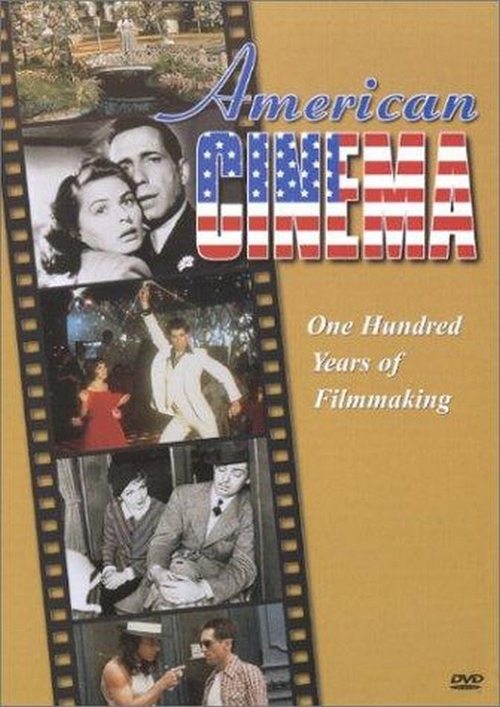
American Cinema
- 1994 – 1996
- Ended
- Documentary
- ~55m / ep
- 1 season
- 8.3/10
13 episode series created by PBS to commemorate 100 years of movie-going. The history of Hollywood and filmmaking comes alive in this spectacular celebration of movie magic. It's a mesmerizing, epic analysis that combines rare archival film, key scenes from immortal movies, interviews with leading filmmakers and commentary from noted film scholars and critics. As seen on PBS, this series is the definitive chronicle of the American cinema, from its beginning to today. Includes interviews with Robert Altman, Clint Eastwood, Harrison Ford, Spike Lee, George Lucas, Sidney Lumet, Julia Roberts, Martin Scorsese, Gene Siskel, Steven Spielberg, Oliver Stone, Quentin Tarantino, and many more.
Latest: Season 1 · 1995
View all seasonsE1. The Hollywood Style
Jun 7, 1995 · 55m
In the classical Hollywood film, the story is primary. Filmmakers rely on style — structure, narrative, and visual elements — to effectively tell their story. Martin Scorsese and Sydney Pollack are among the premier directors who discuss how classical Hollywood style, evolving and yet enduring over time, informs their work.
E2. The Studio System
Jun 14, 1995 · 55m
This program surveys Hollywood's industrial past during the era of contract players and directors, studio police forces, and colorful movie moguls. It also looks at the filmmaking environment of today with studio heads Michael Eisner, Howard Koch, and others. Paramount Pictures, one of the oldest and most successful of the Hollywood studios, serves as a case study.
E3. The Star
Jun 21, 1995 · 55m
Greta Garbo, Cary Grant, Dustin Hoffman — these among many others are names synonymous with Hollywood. Early on, Hollywood saw that recognizable talent could minimize the financial risks of film production. Critics, film scholars, and studio publicists view the stars from many angles: as marketing tools, cultural icons, and products of the industry. Joan Crawford headlines as a case study of the cultural phenomenon of stardom.
E4. The Western
Jun 28, 1995 · 55m
The western is an American myth that has been translated by other cultures and reinterpreted time and again, but never dies. With clips and critical commentary on westerns from John Ford's Stagecoach through the work of Arthur Penn, Sam Peckinpah, and Clint Eastwood, the program traces the aesthetic evolution of the genre as well as its sociological importance.
E5. Romantic Comedy
Jul 5, 1995 · 55m
Breezy and silly to witty and intelligent, romantic comedies have been with us since the 1930s. But the surface humor has often just barely masked issues of gender and sexuality. This program looks back on screwball comedies including It Happened One Night and His Girl Friday. Directors James Brooks and Nora Ephron present interpretations of the genre that reveal the underlying social and psychological messages.
E6. The Combat Film
Jul 12, 1995 · 55m
Beginning with World War II combat films — produced under directives from the federal government — this program examines the role of the combat film in filling a social and political need. Critics and directors describe the evolution of these films, the rise of the Vietnam film, and the influence of the newsreel documentaries and TV news on the genre.
+7 more episodes — open all seasons to browse every episode.