

Animated Hero Classics
- 1991 – 2005
- Ended
- Documentary
- 2 seasons
- 7.2/10
Animated Hero Classics is an educational Animated television series of programs co-produced by Nest Family Entertainment and Warner Bros. The series, geared toward elementary school aged children, includes twenty biographies of both female and male scientists, inventors, explorers, and social champions from around Europe, North America and the Middle East, including George Washington, Abraham Lincoln, Florence Nightingale, Harriet Tubman, Joan of Arc, Benjamin Franklin, Helen Keller, Marco Polo, Marie Curie and Louis Pasteur. The Children's Television Act of 1990 required terrestrial television networks to devote time to Educational and Informative programming for children. Even though Warner Bros' cable networks were not directly affected by these requirements, these programs were debuted on their HBO network's Saturday morning children's block as a show of good faith that the network was committed to quality educational programming for children. The dramatic biographies were meticulously researched by the producers and written to engage both children and adults, providing an entertaining and accessible way to learn about the positive impact that these women and men have had on our world.
Latest: Season 2 · 1995
View all seasonsE1. Alexander Graham Bell
Jun 1, 1995
"You have a gem of a great idea, if you can perfect it," Joseph Henry of the Smithsonian Institute tells Alexander Graham Bell when he presents his theory for the invention of the telephone. When Thomas Watson and Bell begin their work for a multiple telegraph, Bell becomes convinced that he can send the complex sounds of human speech over a wire from its vibrations. Mr. Hubbard, the financier of the telegraph project, laughs when Bell first tells him about the idea for the project and says he will not finance it. Frustrated, Bell and Watson begin to work on the telephone while working on the telegraph without Hubbard knowing it. Bell is constantly inspired by his deaf students and longs to teach them to speak and communicate. His first dedication had always been to be a teacher of the deaf. But, as Bell becomes more and more engrossed in making the telephone invention work, he has little time to work with the students. As the inventors experience triumph in transmitting sound while playing with the telegraph, Bell is distressed to learn of a student, David, who is giving up and going home because he is frustrated with his inability to speak. He meets David at the train as he is leaving to convince him to stay and keep trying, but David refuses. Bell is greatly disappointed in his failure to help the boy and in the unsuccessful attempts to make the telephone work. Bell is frustrated and tired. As he rests on a park bench, his spirit is renewed when a mime communicates with him. He realizes he could never fail if he keeps trying. He and Watson continue working on the telephone with great enthusiasm. Finally, the telephone experimenting works as sound is transmitted through a tube. Watson clearly understands Bell when he says, "Watson, come here. I want you." As they share the joys of success, school begins again. Bell is rewarded by the return of David who has practiced all summer and knows he can succeed, too.
E2. Beethoven
Jan 1, 2005
Even as a young boy, Beethoven marched to the beat of a different drummer. Trained in the traditional music methods by his father, Beethoven was an accomplished pianist by the age of 12. But he yearned to try new sounds and persevered until audiences heard his music. By his early twenties, this persistent young man performed for Joseph Haydn, who compared him to the great Mozart. Sadly, Beethoven began to lose his hearing, but he threw himself even more deeply into his music, composing "Fur Elise," "Sonata Pathetique" and the dramatic "Fifth Symphony" years later, audience members heard what he could not and leapt to their feet in ecstatic appreciation for such passionate music. His creativity gave the world then, as it does today, music that stirs the soul. The video begins in 1827 with 30,000 people paying tribute to the great Beethoven in Vienna, Austria. Then the video switches to his life as a child. Beethoven was driven by his father without patience and love to practice playing the music of Mozart and Haydn on the piano; however, Beethoven preferred to improvise and play his own style of music. This enraged his father as it did many symphony patrons later in life. Beethoven was honored to be asked to move to Vienna and have Haydn as his instructor. After years of playing for royalty, Beethoven was frustrated that all the audiences wished only to hear music from Mozart and Haydn. So, Beethoven decided to move to the countryside where he could compose music as he wished. While living in the countryside, Beethoven noticed his hearing loss was getting more severe and feared going deaf. The world was going through a revolution. The America Colonies threw off the British Empire, and common people replaced the King and Queen of France. Beethoven believed that since the world was changing all around him that music should change also. Beethoven's performances were not embraced by the majority because of his visceral style and the war going on around him; however, Beethoven never gave up despite his despair and lack of encouragement. His courage to keep writing from the heart and his desire to play from the heart would eventually be accepted by the world. As a tribute to the soldiers, Beethoven was commissioned to write a symphony in honor of Wellington's victory over Napoleon. "The Wellington's Victory" was a favorite of the people of Vienna even though it was not one of Beethoven's favorites. Tragically, Beethoven's success could not be enjoyed. His health was fading quickly. In his last days, Beethoven finally wrote the symphony that touched his heart. The Ninth Symphony was his final work with the choral music put to Schiller's poem, "Ode to Joy." "Ode to Joy" spoke to the heart with words, and Beethoven's Ninth Symphony spoke to the heart with music. Sadly, Beethoven did not conduct his last piece of work because of his complete hearing loss. The applause was not heard by Beethoven; but the sight of the audience standing and continually applauding was Beethoven's acknowledgment of the appreciation felt by the Vienna people and the world.
E3. Harriet Tubman
Jun 1, 1996
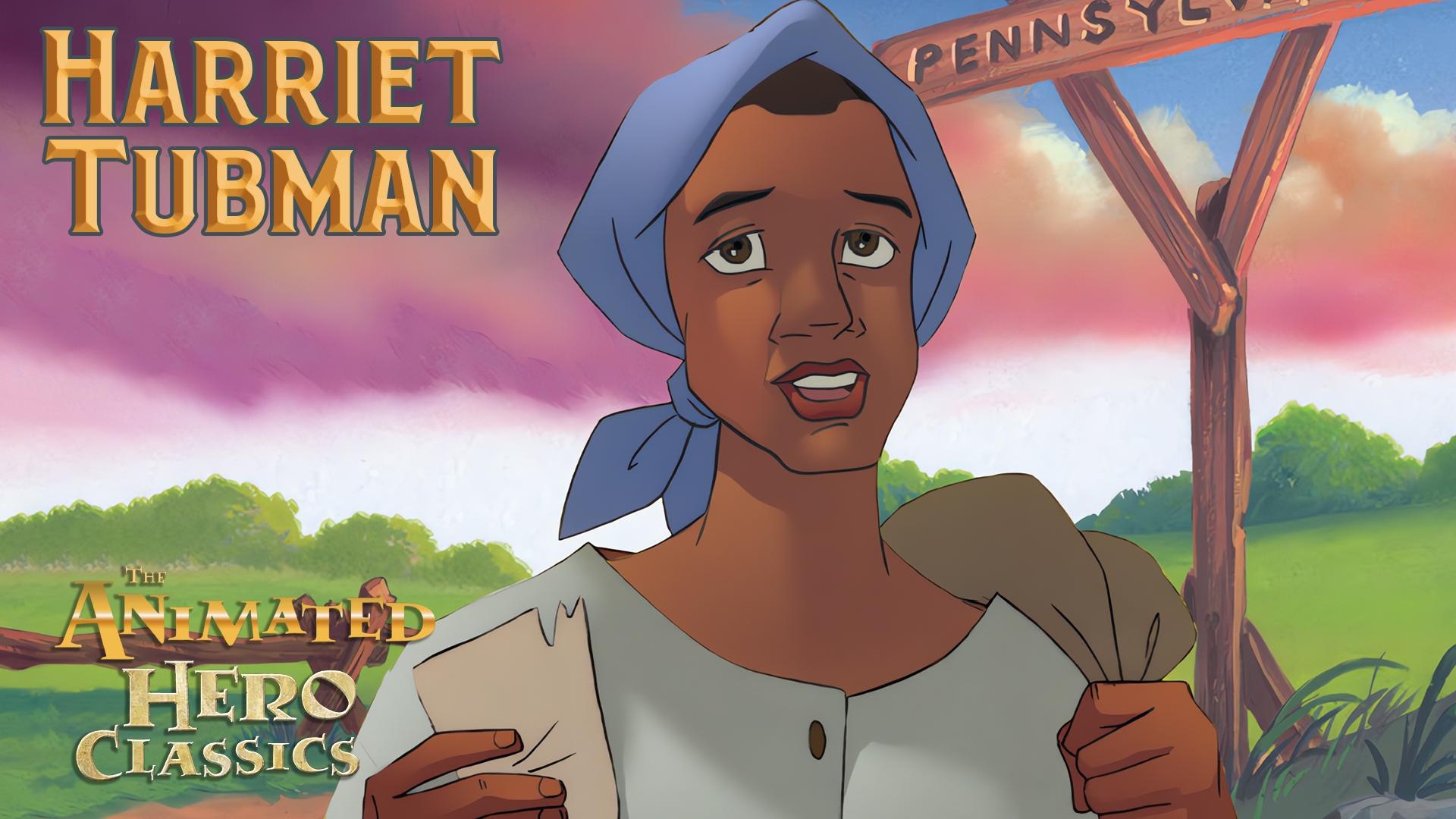
Harriet Tubman has never known what it means to be free. Having been born and raised into slavery, she works hard and does as she is told. However, she longs to be free and hopes to escape to the "promise land." After hearing about an "underground railroad" and learning of a Quaker woman up the river who helps slaves "get on," Harriet tells her father she is escaping. He fears for he life and tells her there isn't really an underground railroad, but she is determined to go. Once at the Quaker woman's home, Harriet learns that the Underground Railroad is a route guided by "conductors" to the North. She goes forward and makes it to the main station in Philadelphia, Pennsylvania. Once there, she is surprised to learn of the many different routes slaves are able to take to freedom. Hearing of her sister and family's proceeding sale, Harriet vows she will never be free until her family is free. Against the stationmaster's warnings, she heads South. Harriet continues to go back and forth from the North to the South and becomes known as the "Moses of her people" with a reward posted for her for $40,000. Harriet is able to successfully rescue her entire family, as well as 300 slaves on 17 dangerous missions to the Confederate South.
E4. The Wright Brothers
Jun 1, 1996
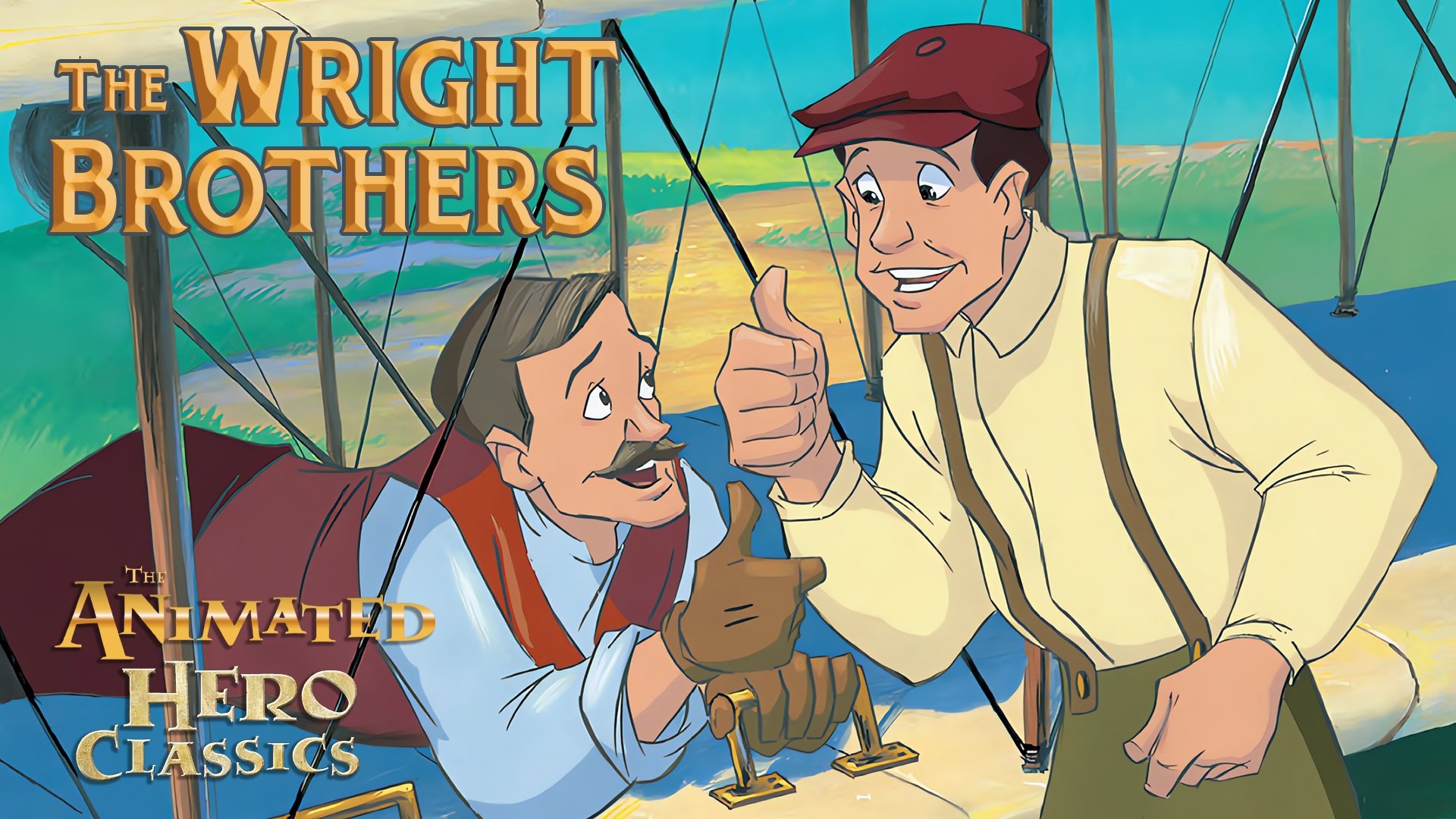
Two bicycle repairmen embark on their dream to fly. With no formal training as either scientists or engineers, they study Lilienthal's diagrams for his glider and learn from experience the keys to controlled flight. As young boys, Wilbur and Orville Wright are full of ideas, enthusiasm and dreams. Above their bicycle repair shop they discover how birds are able to balance by tilting their wings - wing warping. They want to make a glider to do the same thing. "You have a dream, you should do it," their father encourages them. After writing to the "center of knowledge for flight'" Octave Chanute, they learn the best place to glide is Kitty Hawk, North Carolina. They tell Chanute about wing warping and make him promise not to tell anyone until they can perfect it. Their first attempts are unsuccessful, however, as they realize that Lilienthal's figures were incorrect. Wilbur and Orville begin experimenting with the figures. Meanwhile, others are beginning to take flight, but only in the beginning stages. Finally, Wilbur and Orville manage a controlled flight. All they need to do is add an engine. Chanute lets the wing-warping idea slip when he is challenged, but the Wright brothers are not worried - the rest of the world doesn't know how it works. After a 59 second flight, Wilbur and Orville take Santos-Durmont, the French flyer, up on his challenge to show the world they can fly in France and on August 8,1908 the Wright brothers demonstrate to the world the power of controlled flight.
E5. Helen Keller
Jun 1, 1996
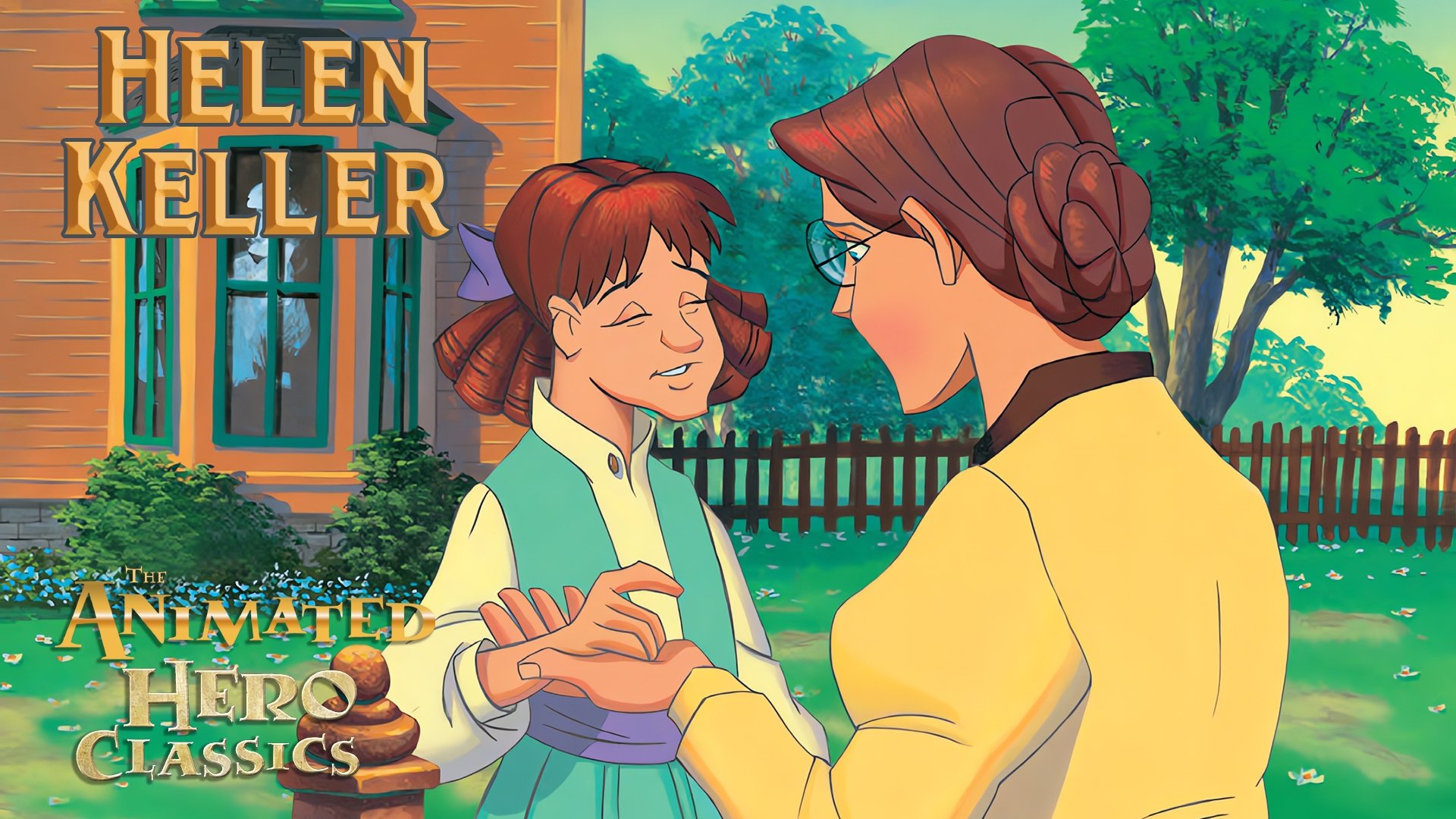
When Helen Keller was a young child, she contracted a high fever that left her sightless and unable to hear. Being the parents of a non-seeing and non-hearing child was a hardship on two loving parents who did all they could but seemed to do it in the wrong way. Out of desperation, they hired a young educator, Anne Sullivan, to teach and train the young Helen. Much to the parent's dismay, Sullivan was a strict and firm disciplinarian with the young, spoiled Keller girl. Sullivan and Helen Keller moved into a house not far down the lane from the main Keller house. There they began to develop a trust and relationship of love and respect for each other. This soon turned into an atmosphere that was ripe for learning without the interference of the Keller parents. Once Helen Keller began to put meaning with the finger spelling that she was doing, she began to learn many words at a rapid rate. Her world began to open and she was able to complete her education and continue advanced training at the university.
E6. Leonardo da Vinci
Jun 1, 1996
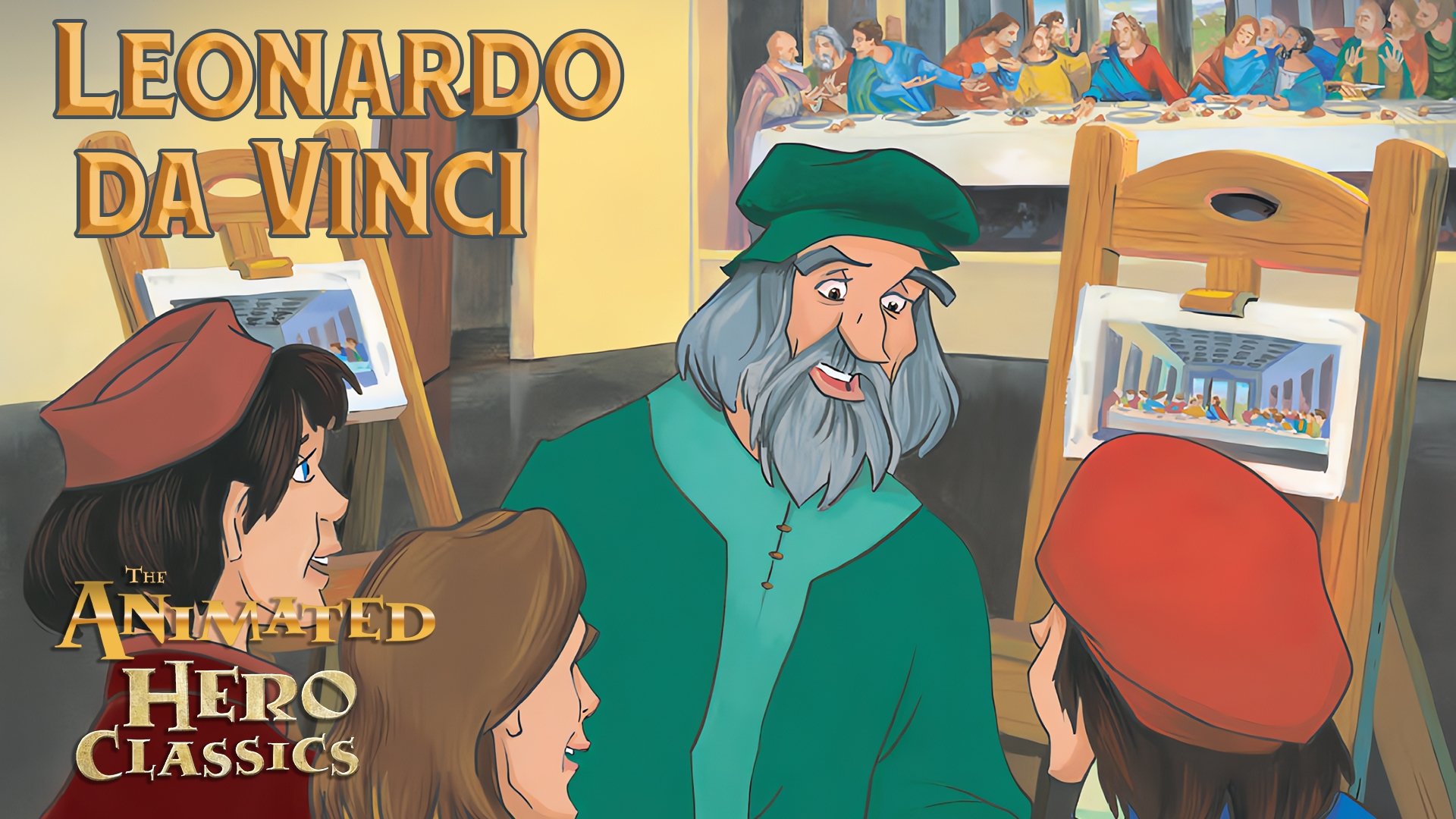
A youthful Leonardo da Vinci studies art under his master, Verrochio in Florence, Italy in 1473. While working as an apprentice under Andrea del Verrocchio, Leonardo learns about color, shading, sculpturing, panel painting and painting of altarpieces. Self-discipline is the key to success in Verrochio's opinion. In 1498, Leonardo is under the service of the Duke and Duchess of Milan. He is commissioned to sculpt a statue of the Duke's father and paint " The Last Supper" for the monks in their dining hall. The Duchess of Milan asks Leonardo to produce a play about stars, planets and space. He is obviously not excited about the project because of the time it will take away from his masterpieces. During the play, Leonardo sees a young boy, Salai, steal some money from the stagehands. Salai tells Leonardo that he is homeless and hopes to become an artist like Leonardo some day. Leonardo invites Salai to live with him and tells him that he will teach him how to paint. The city of Milan erupts into fire while at war. Salai and Leonardo escape with all his sketches and return to Milan. Milan is different from what Leonardo remembers. The apprentice school is no longer being used. Leonardo meets a young Michelangelo. It becomes apparent that Michelangelo and Leonardo's thoughts about training in the arts are very different. Passion and creativity versus discipline and rules. Salai becomes reckless and rebellious. Leonardo strives to keep Salai on the path of righteousness. While trying to develop a method to conserve wall paintings, one of Leonardo's paintings begins to melt off the wall. Leonardo is discouraged and decides to return to Milan. Salai decides to stay in Florence with Michelangelo. Leonardo leaves feeling like a failure. Upon his return to Milan, he visits his painting, "The Last Supper," and sees that young apprentices are using his painting as their study. The young apprentices ask to shake the master's hand, Leonardo da Vinci's hand.


+4 more episodes — open all seasons to browse every episode.
More like this

9 de Enero: El día que dijimos presente· 2014

Prócer· 2023

Wings of the Luftwaffe· 1992

Evil Genius· 2017

World War 2 From Above· 2021

Rainbow Woman· 2020

Monty Don's Paradise Gardens· 2018
Ma'abarot: The Israeli Transit Camps· 2019

Larga vida al teatro· 2015

What's My Name | Muhammad Ali· 2019

BLACKPINK Diaries· 2019

Colgados· 2019

Ronnie's Animal Crackers· 2013

Reyes de España· 1991

Vitals· 2021

Giant Hubs· 2019

Hackers· 2016

Bucket List· 2021